150+ Villagers Patrol Uttar Pradesh's Forests to Protect the Elephants
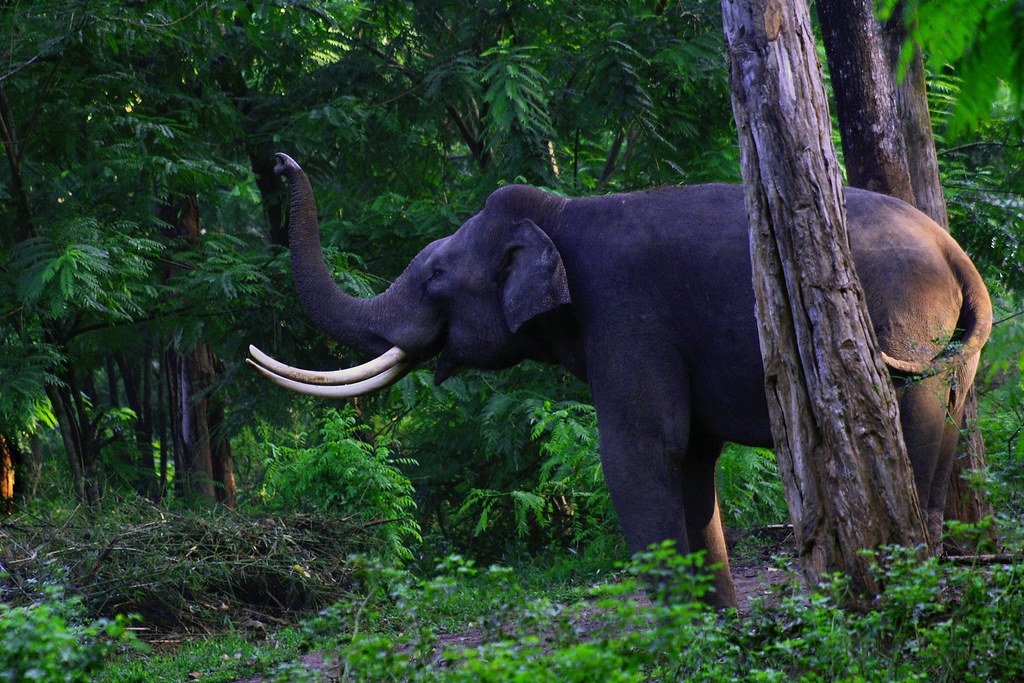
Katarniaghat Wildlife Sanctuary sits in Uttar Pradesh's Bahraich district, on the border with Nepal. It is part of the Terai Arc Landscape, a stretch of sal forest, wetland, and grassland that runs across northern India and southern Nepal, and it connects through the Dudhwa landscape to Nepal's Bardia National Park. Somewhere between 50 and 150 wild elephants move through this area, many of them crossing in from Nepal.
Sugarcane and other crops grow right up to the forest edge here, sometimes just metres from the treeline. That means elephants moving between habitats regularly walk straight through farmland where people live and work. It's a recipe for conflict on both sides: a single night can wipe out a farmer's season, and elephants can be injured, panicked, or killed when frightened villagers try to drive them off.
The Gajmitras
Since 2021, villagers have been tackling this in an organised way. The Nature Environment & Wildlife Society (NEWS) started the Gajmitra, or "elephant friend," initiative, and the Uttar Pradesh Forest Department later strengthened it. Volunteers go through a year-long training programme covering elephant behaviour, conflict mitigation, early-warning systems, and how to respond safely when a herd approaches.
Today, more than 150 trained Gajmitras, close to 160 by some counts, cover villages including Rampurwa, Matehi, Amba, Bishunapur, Bhawanipur, and Bardia. Almost all of them are farmers, and none of them are paid for the night shift.
A night on patrol
The work starts after the farm work is done. "Only after finishing our work, eating dinner" do they get ready for elephant duty, volunteer Suresh Kumar explains. Around 10:30 pm the volunteers gather, and by 11 pm teams of five spread out across the border villages. Two members of each team climb watchtowers overlooking the routes elephants usually take, while the others check fields where fresh footprints were spotted the evening before.
They carry reflective jackets, whistles, torches, handheld sirens, and megaphones. When one team spots elephants, every team is alerted, and the Forest Department joins the response. The aim isn't to fight the animals but to keep people safe and give the elephants room to move back into the forest. Volunteers say they have not needed to tranquilise or capture an elephant locally. Suresh describes the job as mostly observation, coordination, and patience.
Experience has taught them to read the animals. Family herds led by a matriarch are usually easier to guide; lone bulls are less predictable. Women volunteers, still a small share of the group since four joined in the first year, focus on keeping villages prepared, going house to house to make sure families stay indoors and crowds don't gather when elephants are near.
Is it working?
According to NEWS, the initiative cut crop damage by nearly 70% over the past year. Compensation schemes exist for damaged crops, but as volunteer Ashok Kumar points out, "Money can compensate for a damaged field," it can't remove the fear and uncertainty of living next to a forest full of elephants. Patrols that stop the damage before it happens do.
The pressure isn't going away. Elephant sightings that were once mostly seasonal now happen year-round, which volunteers link to fragmented forests and farming creeping closer to the forest edge. That makes community systems like this one more important, not less. It's an unpaid, locally run answer built by people who live with elephants as neighbours and decided that waiting for conflict and cleaning up afterwards wasn't good enough.
Frequently Asked Questions
What are Gajmitras?
Gajmitras, or "elephant friends," are trained village volunteers around Katarniaghat Wildlife Sanctuary in Uttar Pradesh who patrol at night to prevent conflict between people and wild elephants.
Who started the Gajmitra initiative?
The Nature Environment & Wildlife Society (NEWS) started it in 2021, and the Uttar Pradesh Forest Department later strengthened it.
Has the Gajmitra programme reduced crop damage?
According to NEWS, the patrols cut crop damage by nearly 70% over the past year.
Source: The Better India