A Radio Flash That Travelled 10 Billion Years Has Been Traced to Its Home Galaxy, the Most Distant Ever Found
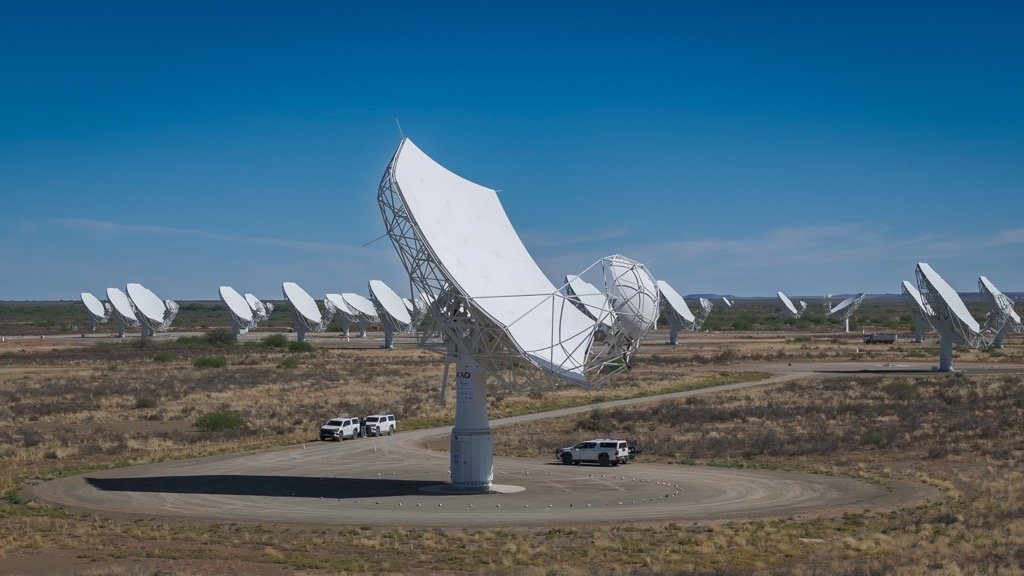
Astronomers have traced a fast radio burst to a galaxy that existed when the universe was only about 3 billion years old, making it the most distant fast radio burst ever pinned to its source. The signal, FRB 20240304B, travelled for more than 10 billion years before South Africa's MeerKAT radio telescope caught it, more than doubling the previous distance record.
No ground-based telescope could see a galaxy at the burst's position. It took NASA's James Webb Space Telescope to reveal the source: a small, young galaxy forming stars at a furious pace. The findings were published in the journal Science on October 8, 2026.
A burst of radio waves that set out more than 10 billion years ago, when the universe was only about 3 billion years old, has been traced back to the galaxy it came from. It is the most distant fast radio burst ever pinned to a source, more than doubling the previous record, and the result was published in the journal Science on October 8, 2026.
The burst, catalogued as FRB 20240304B, was picked up on March 4, 2024 by the MeerTRAP project using MeerKAT, an array of 64 radio dishes in South Africa's Karoo region. Like all fast radio bursts, it lasted only a fraction of a second. Its signal carried an unusually strong sign of having passed through a great deal of intervening gas, a first hint that it had come from very far away.
Confirming that meant finding the galaxy it came from, and that proved hard. MeerKAT gave a precise position, but the largest ground-based optical telescopes saw nothing there. The team turned to NASA's James Webb Space Telescope, whose infrared instruments are built to see the stretched light of the early universe. Webb revealed a small, metal-poor galaxy forming stars at a high rate, and spectroscopy confirmed its distance.
"We have caught a fast radio burst from a time when the universe was only about 3 billion years old," said lead author Dr. Manisha Caleb of the University of Sydney, who led the study with Dr. Themiya Nanayakkara. The team also included Dr. Laura Driessen and PhD student Kavya Shaji from Sydney, and Professor Ben Stappers of the University of Manchester, the principal investigator of MeerTRAP.
The type of host galaxy matters. Young, rapidly star-forming galaxies produce many massive stars that end their lives quickly, leaving behind magnetars, neutron stars with extraordinarily powerful magnetic fields. The finding adds weight to the idea that at least some fast radio bursts come from these objects, and shows that distant bursts can be used to measure the hidden matter spread between galaxies across most of cosmic history.
Why It Matters
Fast radio bursts are among astronomy's biggest open puzzles. They last only milliseconds, yet release enormous amounts of energy, and nobody is certain what produces them. Finding the galaxy a burst came from is the best clue to its cause, and this one points towards a young magnetar, the dense, intensely magnetic remnant of a collapsed star.
There is a second payoff. As a burst travels, the gas it passes through stretches its signal in a measurable way, so each burst acts like a probe of the thin, invisible matter spread between galaxies. A burst from this far away samples more than 10 billion years of cosmic history, opening a new way to study how the universe's ordinary matter was distributed when galaxies were still young.
Key Details
- Burst: FRB 20240304B
- Detected by: MeerKAT radio telescope, South Africa (MeerTRAP project), March 4, 2024
- Light-travel time: More than 10 billion years
- Universe's age at emission: About 3 billion years (redshift around 2)
- Host galaxy found by: James Webb Space Telescope, infrared imaging and spectroscopy
- Host galaxy: Small, metal-poor, actively star-forming
- Record: More than doubles the previous distance record for a localised FRB
- Published: Science, October 8, 2026
Technical Analysis
The challenge was not detecting the burst but finding where it came from. MeerKAT's array of 64 dishes gave a precise position on the sky, but follow-up with the largest ground-based optical telescopes found nothing there: the host galaxy was too faint and too distant. Webb's infrared instruments, designed to see the redshifted light of the early universe, picked up a compact galaxy at the burst's location and confirmed its distance with spectroscopy.
"The galaxy hosting this burst is surprisingly small, metal-poor and undergoing a very active episode of star formation," said co-author Dr. Laura Driessen of the University of Sydney. Galaxies like that produce many massive, short-lived stars, which is consistent with the burst coming from a young magnetar left behind by one of those stars.
Future Outlook
The following is analysis and prediction, not confirmed fact.
The researchers suggest that the most powerful bursts could be detectable from even earlier in cosmic history. Larger radio arrays now being built, including the Square Kilometre Array, which incorporates MeerKAT, should find many more distant bursts, and Webb has now shown it can identify their faint host galaxies. Together, they could turn fast radio bursts from a curiosity into a routine tool for mapping matter across the universe.
Key Takeaways
- FRB 20240304B is the most distant fast radio burst ever traced to its host galaxy, more than doubling the previous record.
- Its signal travelled for more than 10 billion years, from when the universe was about 3 billion years old.
- MeerKAT detected the burst; the James Webb Space Telescope found its faint host galaxy, which ground-based telescopes could not see.
- The small, star-forming host galaxy supports the idea that some bursts come from young magnetars.
- Distant bursts can be used to study the invisible matter between galaxies across cosmic history.
Frequently Asked Questions
What is a fast radio burst?
A fast radio burst (FRB) is a flash of radio waves lasting only milliseconds that releases a huge amount of energy. Their exact cause is still unknown, though magnetars, highly magnetised neutron stars, are a leading explanation.
How far away is the most distant fast radio burst?
FRB 20240304B travelled for more than 10 billion years before reaching Earth. It was emitted when the universe was about 3 billion years old.
Which telescopes discovered it?
South Africa's MeerKAT radio telescope detected the burst, and NASA's James Webb Space Telescope identified the galaxy it came from.
Who led the research?
The study was led by Dr. Manisha Caleb and Dr. Themiya Nanayakkara of the University of Sydney, and published in Science on October 8, 2026.
Source: Phys.org, UC Santa Cruz